

















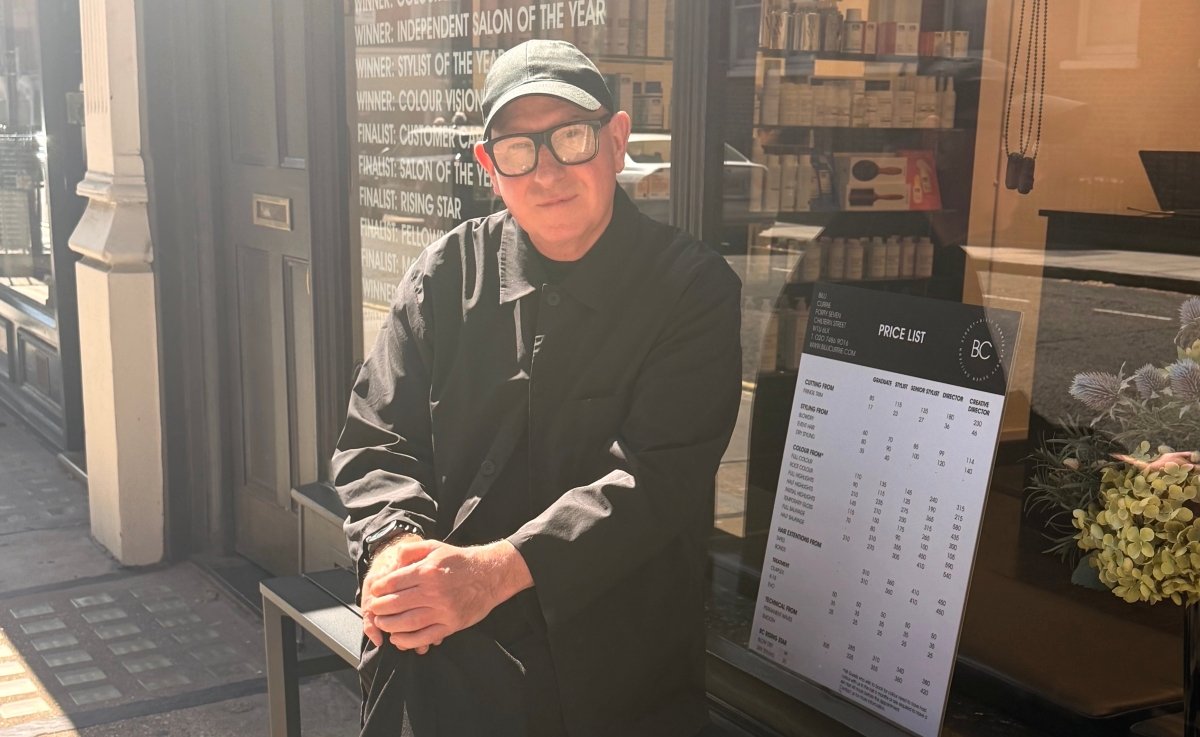
On Chiltern Street, where craft and culture quietly intersect, we spoke with Billi Currie - one of London’s most respected hairdressers - about connection, discipline, and what it really takes to sustain excellence.
Billi, you’ve been at the top of your game in London for years. Take us back — how did your journey into hair begin, and what first drew you to it?
I did not have many options when I was 15, so a friend told me there was a Saturday job available in a hair salon. That was the beginning — then the addiction began.

Hairdressing is both craft and connection. What has kept you so passionate about it over time?
I think connection, because you can learn craft but you cannot learn connection. Connection is who you meet, how they can help, how they can direct you — so it is everything to me. Every client you meet has a part to play in your next step forward. The craft is study, study, study every day.
“You can learn craft, but you cannot learn connection.”
You’ve built a loyal following on Chiltern Street. What does that street, and that part of London, mean to you?
It’s a very artisan environment. Marylebone has a village feel, with high-end independents. Being in an area like Chiltern Street pushes you to strive to be exceptional.
Being a leading hairdresser in London carries a certain weight. How would you define your career?
Understated. Excellence in performance, high-quality education, an experienced team, and working with individuals who are internationally renowned — recognised as global authorities in their field across cut, colour, stage work, and media.
Your relationship with clients feels central to your work. How do you build that level of trust over time?
First and foremost, be good at what you do. Study your craft — study, study, study and the client will feel secure in your experience and direction. Integrity and humility are an important part of that relationship.

There’s something quite intimate about sitting in a hairdresser’s chair. What do you think people are really coming to you for, beyond the haircut?
They come to me for a vision they cannot see, and for honesty that makes them feel comfortable and calm. Going to a salon is therapeutic — being taken care of and feeling safe. It goes beyond just a haircut.
“They come to me for a vision they cannot yet see.”
In an industry that moves quickly, what are the challenges of maintaining a consistently high standard?
Your team has to be excellent and able to work in many different environments. You need to educate regularly and discuss ideas as a team. There must be a balance of youth and experience — that contrast is very important. You also need awareness of everything around you, from the economy to society to technology. Most importantly: listen, listen, listen. You hear a lot when you don’t speak.
“Listen, listen, listen — you hear a lot when you don’t speak.”
How do you stay sharp — creatively and technically — after so many years in the industry? What has changed in how people approach the client and the profession today?
Always have people around you who are smarter than you — from 16-year-olds to 60-year-olds. Smart and difficult people can be challenging, but a hairdresser has to be intelligent and learn how to listen to the person in the chair.

You lead a team. What does good leadership look like to you in a salon environment?
An art teacher once told me, when I was very young, that every day she walked into the same class and looked at it as if it were the first day she had met them. That stayed with me. With your team, always look, listen, and learn. You are not there to pick them up when they fall - you are there to hold them as they fall, so the landing is more comfortable. And never take credit; what you do is a gift that does not need an award.
The wellbeing of staff is something many businesses are rethinking. How do you support your team through the pace and demands of the job?
Flexible timing is one of the most important movements moving forward. The traditional Monday-to-Friday, nine-to-five structure is instinctive, but what once took five days can now often be done in three or four. Time will be one of the most important shifts for the future.
What have been some of the biggest challenges you’ve faced in your career, and how have they shaped the way you work today?
Humans have changed more than anything else. Because of social media and constant movement, both staff and clients are more transient - it is a challenging time. The smallest details now have to be magnified, and the smoothness of the experience has to feel invisible. Since Covid, people have become more complex.
“The smoothness of the experience should feel invisible.”
Running a salon requires constant energy. How do you personally reset or look after your own wellbeing?
First, you have to love what you do — waking up wanting to give and to please unconditionally. Then, you must be able to turn off when the day is done. Beyond that, diet, rest, and support systems matter - nutritionists, medical professionals - wellbeing is not something you can manage entirely on your own.
Being neighbours on Chiltern Street, we see the rhythm of the area every day. How do you think places like ours - small, considered spaces - contribute to London living?
Everything begins with small things. Chiltern Street and Marylebone have always been independent and characterful. The design of the shops and buildings is historic and iconic, which attracts people who appreciate design, quality, and style.
Looking ahead, what does staying at the top of your game mean to you now - and what continues to drive you forward?
Every day, I feel like I have not started yet. Every day, I feel I need to do more. Every day, I want to be better than the day before. The answer is simple: every day is the first day.
“Every day is the first day.”

